Art That Speaks: How Paul Nicklen's Wildlife Prints Are Transforming American Living Spaces Into Conversations About the Planet
There is a particular kind of silence that follows the first time a guest notices a Paul Nicklen photograph hanging in a home. The gaze lingers. Questions surface. And almost inevitably, a conversation begins — not about the frame, the color palette, or where the piece was purchased, but about the animal depicted, the world it inhabits, and what is being done to protect it.
This is not accidental. It is, in fact, the defining characteristic of Nicklen's work as both art and artifact: it refuses to be passive. For a growing community of American collectors, this quality is precisely what motivates their acquisitions — and what transforms the act of collecting from aesthetic pleasure into something approaching moral purpose.
The Emotional Architecture of a Nicklen Print
Psychologists who study the relationship between visual art and emotional response have long noted that images of the natural world carry a distinctive psychological charge. They activate what researchers sometimes call "awe" — a complex emotional state that combines wonder, humility, and a sense of connection to something larger than oneself. Paul Nicklen's photographs are, by this measure, exceptional instruments of awe.
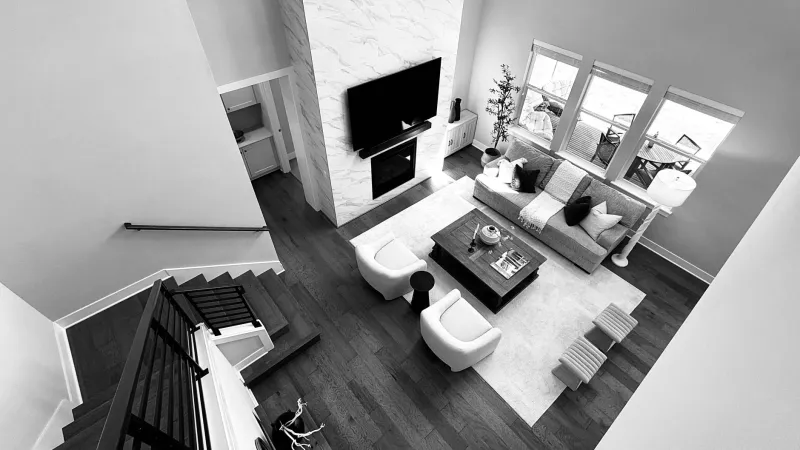
Consider the effect of a large-format print of a polar bear navigating fractured Arctic ice, installed above a fireplace in a Denver living room, or a luminous image of a humpback whale ascending through blue Pacific water displayed in a Manhattan apartment. These images do not simply decorate a wall. They introduce a presence — a reminder that the world beyond the window extends into ecosystems of breathtaking complexity and fragility.
For collectors in the United States, where environmental discourse has become increasingly polarized, the artwork serves a uniquely unifying function. The beauty of Nicklen's imagery transcends political identity. It is difficult to stand before a perfectly rendered leopard seal and feel indifference toward the ice shelf that sustains it.
From Acquisition to Advocacy: The Collector's Journey
Many of Nicklen's American collectors describe a trajectory that begins with aesthetic admiration and evolves into active engagement. The initial purchase is often motivated by the visual power of a specific image — perhaps a wolf photographed in the blue hour of a Canadian winter, or a sea turtle ascending through shafts of tropical light. But the experience of living with the work over weeks and months produces a shift.
Collectors report that the images prompt them to research the species depicted, to follow Nicklen's conservation organization SeaLegacy on social media, and to reconsider their own consumption habits. Some have made significant donations to marine conservation nonprofits. Others have organized viewing gatherings in their homes, using the artwork as an anchor for discussions about climate policy, ocean acidification, and the accelerating loss of biodiversity.
This phenomenon — the artwork as catalyst rather than conclusion — reflects something essential about Nicklen's artistic philosophy. His photographs are not elegies for a vanishing world. They are arguments for its preservation, rendered in extraordinary visual terms that bypass intellectual resistance and speak directly to the viewer's sense of wonder.
Interior Design as Environmental Statement
American interior design culture has, in recent years, moved increasingly toward what designers call "intentional living" — the idea that the objects and images one chooses to inhabit a space should reflect one's values as much as one's aesthetic preferences. Paul Nicklen's work sits at the precise intersection of these two impulses.
Interior designers working with environmentally conscious clients in cities such as San Francisco, Seattle, Austin, and New York have noted a marked increase in requests for large-format nature photography that carries genuine artistic and ethical weight. Nicklen's prints satisfy both criteria with rare completeness. They are technically and aesthetically masterful — the kind of work that commands attention in any design context — while simultaneously carrying a provenance of scientific rigor and conservation commitment that gives the collector something to stand behind.
A Nicklen print in a boardroom communicates that the organization values both beauty and responsibility. In a pediatrician's office, it introduces children to the majesty of wildlife they might otherwise encounter only through screens. In a private residence, it anchors the space in something larger than personal taste.
The Limited Edition as Ethical Choice
One dimension of collecting Nicklen's work that resonates particularly with American buyers is the limited-edition structure of the prints available through Paul Nicklen Gallery. In a cultural moment defined by mass production and algorithmic reproduction, the deliberate scarcity of each edition carries genuine meaning.
When a collector acquires a numbered print, they are not simply purchasing an image. They are participating in a carefully considered system of value — one in which rarity, craftsmanship, and conservation purpose are intertwined. A portion of proceeds from gallery sales supports SeaLegacy, the conservation organization Nicklen co-founded, ensuring that the act of collecting directly funds the protection of the ecosystems depicted in the work.
This circular relationship between art, commerce, and conservation is one that American collectors find increasingly compelling. It resolves the tension that some feel between the luxury of collecting fine art and the urgency of environmental crisis. With a Nicklen acquisition, these impulses are not in conflict — they are, in fact, the same gesture.
Conversation as Conservation
Ultimately, the most significant impact of a Paul Nicklen photograph in an American home may be the conversations it generates across years and decades. A child who grows up beneath an image of a narwhal in Arctic waters absorbs, without being lectured, a sense of the natural world's extraordinary character. A dinner party guest who pauses before a print of a wolf pack in winter light carries that image into subsequent conversations about wilderness preservation.
Art has always functioned as a vehicle for values — a way of making the invisible visible and the abstract concrete. In Nicklen's work, the invisible world is the ocean's interior, the Arctic's edge, the forest's depth. And the concrete reality it reveals is both magnificent and imperiled.
To collect this work is to choose to live with that reality — and to share it with everyone who enters your space. For a growing number of Americans, that choice is among the most meaningful they have made as both collectors and citizens.