Beneath the Surface: The Extraordinary Science and Craft Behind Paul Nicklen's Underwater Imagery
There is a moment, suspended somewhere between thirty and sixty feet below the ocean's surface, where light bends in ways that no studio can replicate. Particles drift like slow constellations, and creatures that most human beings will never encounter move with sovereign indifference through their world. It is precisely here — in this cold, pressurized, and utterly unforgiving environment — that Paul Nicklen does his most consequential work.
For collectors who have acquired a Nicklen print or are considering one for their home or corporate space, understanding the extraordinary labor and science embedded in each image transforms the act of collecting into something far more meaningful. These are not photographs taken from a boat or edited into existence on a screen. They are the result of meticulous preparation, scientific partnership, and a physical commitment that few artists in any medium are willing to make.
Engineering Vision: The Equipment That Makes the Impossible Possible
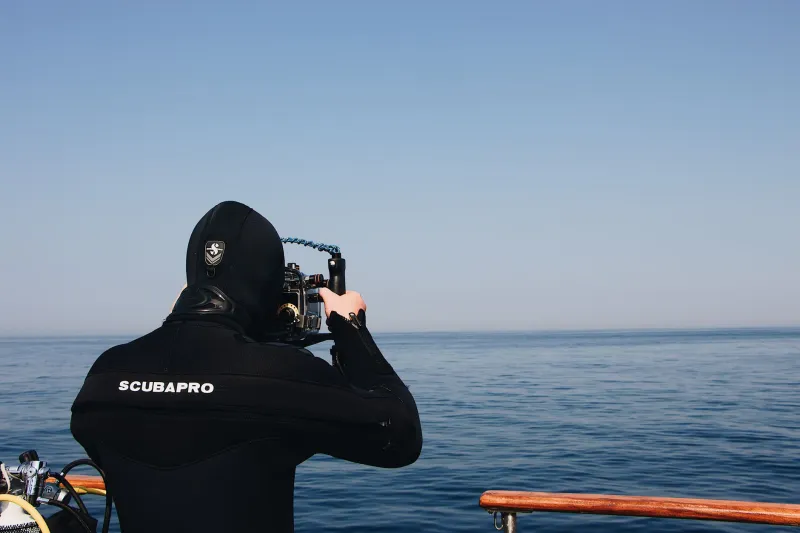
Underwater photography at the level Nicklen practices demands equipment that operates at the intersection of industrial engineering and artistic precision. His primary cameras are housed within custom-built underwater housings capable of withstanding pressures at significant depths — enclosures that must be both structurally flawless and ergonomically responsive, since a hesitation of even a fraction of a second can mean the difference between an iconic image and a missed encounter.
Lighting is perhaps the most technically demanding variable. Natural light diminishes rapidly with depth, and the color spectrum shifts dramatically — reds and oranges disappear within the first few feet, leaving a world rendered in blues and greens. To counteract this, Nicklen employs powerful strobe systems that restore the full chromatic range of marine life, allowing a leopard seal's spotted coat or a coral formation's vivid orange to appear as nature intended. The placement and timing of these strobes requires an understanding of physics that rivals that of a cinematographer on a major film production.
Wide-angle lenses are frequently deployed to capture the sense of vast oceanic scale, while macro lenses reveal the intricate, almost alien architecture of smaller organisms. The selection of optics is never arbitrary — it is dictated by the behavior of the subject, the clarity of the water, and the narrative Nicklen intends to construct within the frame.
The Science of Access: Collaboration With Marine Researchers
What separates Nicklen's work from conventional wildlife photography is his deep collaboration with the scientific community. Before any expedition departs, he consults with marine biologists, oceanographers, and conservation scientists to understand migration patterns, seasonal behaviors, and the ecological conditions that will determine where and when specific species can be encountered.
This scientific grounding is not merely logistical — it is philosophical. Nicklen approaches each expedition with the rigor of a field researcher, gathering data about water temperature, salinity, and current patterns that will influence both his diving strategy and his compositional choices. His work has been published in National Geographic and has contributed to peer-reviewed conservation discussions, a testament to the credibility his scientific partnerships have lent to his practice.
For American collectors accustomed to associating fine art with studio production, this field-science dimension adds a layer of authenticity that is genuinely rare. Every print available through Paul Nicklen Gallery carries within it the accumulated knowledge of scientists, conservationists, and explorers who made the image's creation possible.
Diving Into Extremity: The Physical Demands of Arctic and Deep-Sea Work
The technical equipment is only as effective as the person operating it, and operating it in Arctic waters or near hydrothermal vents demands a physical and psychological resilience that borders on athletic. Nicklen has spent years developing cold-water diving techniques that allow him to remain functional in temperatures approaching freezing — conditions where dry suits, heated undergarments, and carefully managed dive profiles become matters of survival rather than comfort.
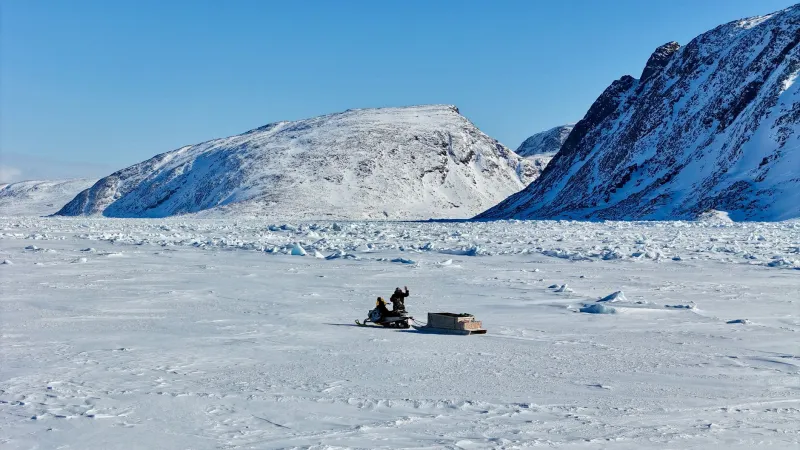
In polar environments, the challenge is compounded by ice. Diving beneath sea ice requires a buddy system, precise entry and exit planning, and an acute awareness of shifting ice conditions above. A diver disoriented beneath a solid ice ceiling faces potentially fatal consequences. Nicklen navigates these environments with trained dive partners and pre-planned safety protocols, yet the inherent risk is never fully eliminated.
Deep-sea expeditions introduce a different category of challenge: decompression management. Extended dives at depth require carefully staged ascents to prevent decompression sickness, meaning that even after the photographic work is complete, Nicklen must maintain composure and precision during a slow, methodical return to the surface. The mental discipline required to remain calm and focused during these ascents — often after a physically and emotionally intense dive — is a skill developed over decades.
Composition as Conservation: The Artistic Philosophy Within the Frame
All of this science and physical endurance would be meaningless without a commanding artistic vision. What makes Nicklen's underwater imagery transcend documentation and enter the realm of fine art is his understanding of composition, light, and narrative tension.
He frequently positions himself at the eye level of his subjects, creating a sense of equality and intimacy that invites the viewer into the animal's world rather than observing it from above. The resulting images — whether of a narwhal ascending through Arctic light or a sea lion spiraling through kelp — carry an emotional weight that purely technical photography cannot achieve.
For collectors displaying his work in American homes and galleries, this emotional resonance is precisely what distinguishes a Nicklen piece from decorative wildlife imagery. These photographs do not simply depict nature; they argue for its irreplaceable value. And that argument, rendered in extraordinary color and detail across archival paper or aluminum, is one that continues to speak long after the initial viewing.
The Gallery as Gateway
Paul Nicklen Gallery exists as the definitive destination for those who wish to bring this extraordinary body of work into their lives. Each edition is produced with the same commitment to quality that governs the photographic process itself — archival inks, museum-grade substrates, and a limited-edition framework that ensures the integrity and value of every acquisition.
To collect a Nicklen underwater photograph is to own a record of a world that few will ever witness firsthand — a world that required extraordinary science, physical courage, and artistic mastery to reveal. That is not merely a purchase. It is a profound act of cultural and environmental stewardship.