After the Shutter: The Rigorous Art of Choosing One Image from Ten Thousand
There is a common misconception about wildlife photography: that the hardest part is being there. Enduring the cold, earning the animal's trust, steadying the camera at the decisive instant—these are the feats that capture the public imagination. And yet, for Paul Nicklen, the moment the shutter closes initiates an entirely separate discipline, one governed not by endurance or instinct but by an exacting and deeply personal form of judgment. The selection of a single frame from what may be thousands of exposures is, in its own right, an act of authorship.
For collectors and art enthusiasts who have stood before a Nicklen print and felt something shift inside them, understanding this curatorial process reveals why his work transcends the category of nature documentation and enters the realm of fine art.
The Weight of Abundance
A single expedition into the Arctic, the Antarctic, or the open ocean can yield an extraordinary volume of raw material. Digital capture has liberated photographers from the scarcity of film, and Nicklen works with that freedom deliberately—allowing sequences to unfold, tracking a subject's behavior across dozens of consecutive frames, returning to the same animal or landscape across multiple sessions. The result is an archive of tremendous richness and, for that very reason, tremendous challenge.
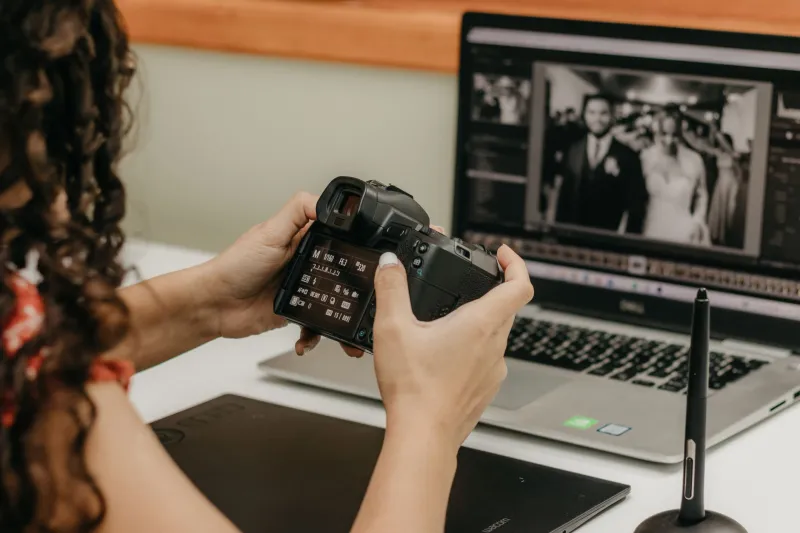
The editing process—understood here not as digital manipulation but as the act of selection—begins with what photographers sometimes call the first cull. This is the blunt, unsentimental pass through every frame with a single question in mind: is this technically defensible? Sharpness, exposure, depth of field, and motion clarity are evaluated without sentiment. Images that fail these criteria are eliminated regardless of their subject matter. A fleeting expression on a leopard seal's face means nothing if the frame is irreparably soft.
But technical adequacy is merely the threshold. What follows is far more nuanced.
Narrative Over Documentation
Nicklen has spoken extensively about his belief that a photograph must earn its place on a wall by doing something more than recording a moment. It must tell a story—not in the journalistic sense of conveying information, but in the literary sense of creating an experience. When he returns from the field and sits with thousands of selects, the question that guides him is not which frame is the sharpest but which frame says the most.
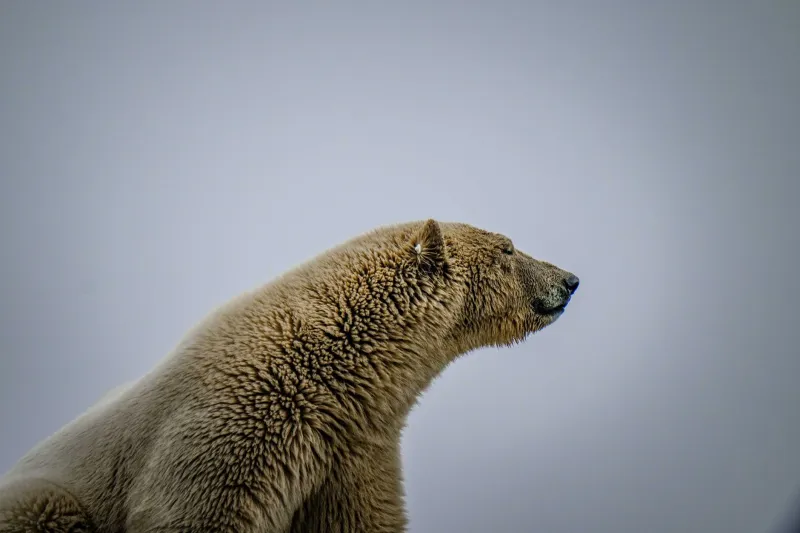
This distinction is consequential. Two images from the same sequence may be technically equivalent. One captures a polar bear mid-stride, perfectly exposed, compositionally balanced. Another, taken a fraction of a second earlier, shows the animal in a posture that is slightly less resolved but carries within it a quality of intention—a sense that the creature is about to do something, that the world within the frame is alive with imminence. For Nicklen, the second image is almost always the more compelling choice. It invites the viewer into an unfolding story rather than presenting a resolved conclusion.
This preference for tension over resolution, for the suggestive over the declarative, is a defining characteristic of his editorial sensibility—and a primary reason his prints reward prolonged attention.
The Role of Light as Arbiter
Among the technical variables that inform Nicklen's final selection, light occupies a position of singular authority. His years working in polar environments have given him an intimate understanding of how natural illumination behaves at extreme latitudes—the way low-angle Arctic sun sculpts a subject in three dimensions, the manner in which diffused overcast renders underwater color with an almost painterly fidelity.
When reviewing a sequence, he is acutely attentive to the precise quality of light within each frame. A difference of mere seconds can mean the difference between light that flatters and light that reveals. He looks for moments when illumination does something active—when it catches the breath of a humpback whale in a way that transforms vapor into architecture, or when it falls across a glacier's surface to expose a texture that the naked eye might overlook entirely.
For the collector, this attention has a tangible consequence. A Nicklen print does not simply depict its subject. It presents that subject as light itself has interpreted it—which is to say, as something perpetually in the act of being discovered.
Emotional Resonance as a Technical Standard
Perhaps the most singular aspect of Nicklen's selection process is his insistence on treating emotional resonance as a legitimate—and rigorous—criterion. He has described sitting with a sequence for hours, returning to it across days, waiting to understand which image continues to generate a feeling upon repeated viewing and which ones exhaust themselves quickly.
This is a practice borrowed less from photography than from painting and sculpture, where artists have long understood that the work which endures is the work that reveals something new with each encounter. A print destined for a collector's wall must function across years of daily proximity. It must be capable of changing as the viewer changes—of looking different on a Tuesday morning than it does on a Friday evening, of carrying a different weight in winter than in summer.
Images that pass this test tend to share certain qualities: compositional asymmetries that keep the eye moving, tonal ranges that reward close inspection, and a quality of presence in the subject that suggests interiority rather than mere appearance. These are not accidental properties. They are the result of Nicklen's field instincts working in concert with his editorial intelligence.
From Archive to Edition
Once a final image is identified, the process of translating it into a collectible print introduces another layer of decision-making. Print size, paper selection, and finishing specifications are all chosen in service of the image's specific character. A photograph defined by vast, quiet space may demand a larger format to allow that stillness to breathe. An intimate portrait of a marine animal may be more powerful at a scale that mirrors the viewer's own face.
The edition itself is a further act of curation. By limiting the number of prints available for any given image, Nicklen preserves the relationship between scarcity and significance that defines serious collecting. A work that exists in a finite number of examples carries with it an implicit statement: this image was chosen, and it was chosen carefully.
The Collector's Inheritance
For those who acquire a Paul Nicklen print, the object on the wall is the final artifact of a process that began in some of the most remote and demanding environments on earth and continued through thousands of acts of judgment, rejection, and refinement. The image that survived that process—the single frame selected from an archive of thousands—carries within it the full weight of that journey.
This is what distinguishes a Nicklen print from a beautiful photograph. It is the product of a wilderness encounter and a curatorial philosophy in equal measure. To collect it is to inherit both.