The Art After the Art: Paul Nicklen's Post-Production Philosophy and the Making of a Collector's Print
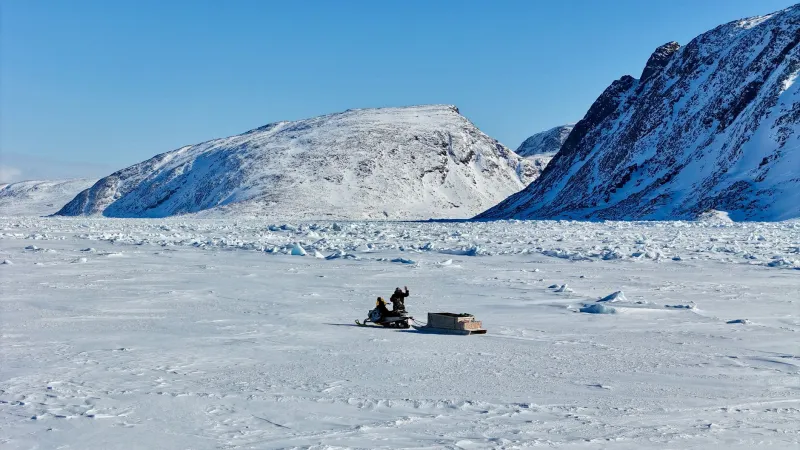
When Paul Nicklen returns from an expedition — whether from the fractured sea ice of the Arctic, the kelp forests of British Columbia, or the volcanic coastlines of the South Atlantic — he carries with him something far more complex than a hard drive full of images. He carries a sensory record: the quality of light at a particular hour, the behavioral nuance of an animal in a singular moment, the ambient mood that no camera sensor can fully encode on its own. The work of translating that lived experience into a print worthy of a collector's wall begins only after the boots come off.
This post-production journey — largely invisible to the audience that ultimately encounters the finished work — is, in many respects, as demanding and as artistically consequential as the expedition itself. It is where craft meets philosophy, and where the difference between a technically accomplished photograph and a genuine work of art is decided.
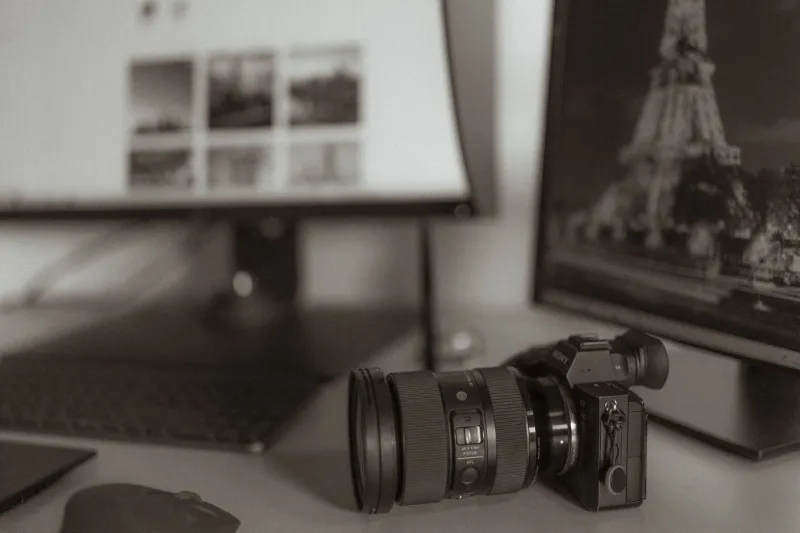
The Editing Room as Creative Studio
Nicklen's field sessions generate an overwhelming volume of raw material. A single multi-week expedition might yield tens of thousands of individual frames and hours of video footage, each one a candidate for scrutiny. The initial editing pass is, by necessity, an act of elimination — a disciplined process of reducing abundance to essence.
But the selection process is never purely technical. Nicklen has spoken at length about the importance of narrative coherence in his imagery, and that principle governs the editing room as much as it does his fieldwork. A frame may be technically flawless — sharp, correctly exposed, compositionally balanced — and still fail to advance the visual story he is trying to tell. Conversely, an image with a degree of atmospheric imperfection may carry an emotional truth that renders it indispensable.
This distinction is one that serious collectors intuitively understand. The prints available through Paul Nicklen Gallery are not simply the "best" images in a technical sense. They are the images that bear witness most faithfully to a moment, a relationship, or a place.
Color Grading as Artistic Statement
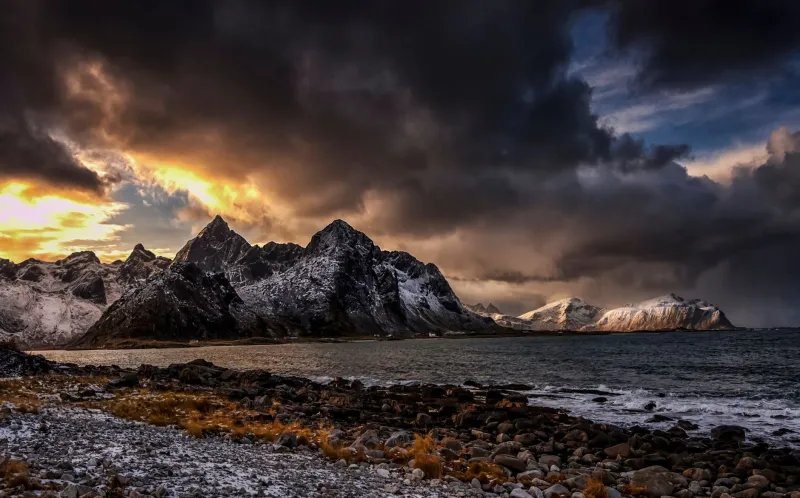
Perhaps no element of post-production is more revealing of an artist's sensibility than color grading, and Nicklen's approach in this area is both deliberate and philosophically consistent. His palette tends toward the authentic rather than the spectacular — a choice that runs counter to the supersaturated aesthetic that has come to dominate wildlife imagery on social media platforms.
Where other photographers might amplify the warmth of a polar sunrise or deepen the blue of an underwater scene to heighten visual impact, Nicklen exercises restraint. His color decisions are guided by a commitment to perceptual honesty — to rendering the world as it was actually encountered, rather than as it might be imagined. This philosophy reflects a broader artistic conviction: that the natural world, rendered truthfully, is more extraordinary than any enhancement can improve upon.
For collectors, this approach has a meaningful implication. A Nicklen print does not age in the way that heavily processed imagery often does. Aesthetic trends shift, and photographs that once appeared stunning through the lens of a particular moment can come to feel dated. Nicklen's tonal restraint gives his work a timeless quality — one that holds its integrity across decades and across the varied lighting conditions of different residential and institutional spaces.
The Technical Demands of Exhibition-Quality Output
Beyond the creative decisions of selection and color, the production of a gallery-ready print involves a series of highly technical choices that directly affect how a work is experienced in a physical space. Print medium, surface finish, substrate, and scale all interact to determine whether an image achieves the presence its subject demands.
Nicklen's large-format prints — many of which are produced at scales that allow the viewer to feel genuinely immersed in the scene — require source files of exceptional resolution. This is one reason why his commitment to field craft is inseparable from his post-production ambitions. An image destined for significant enlargement must be technically unimpeachable at the point of capture; no amount of post-processing can manufacture detail that was never recorded.
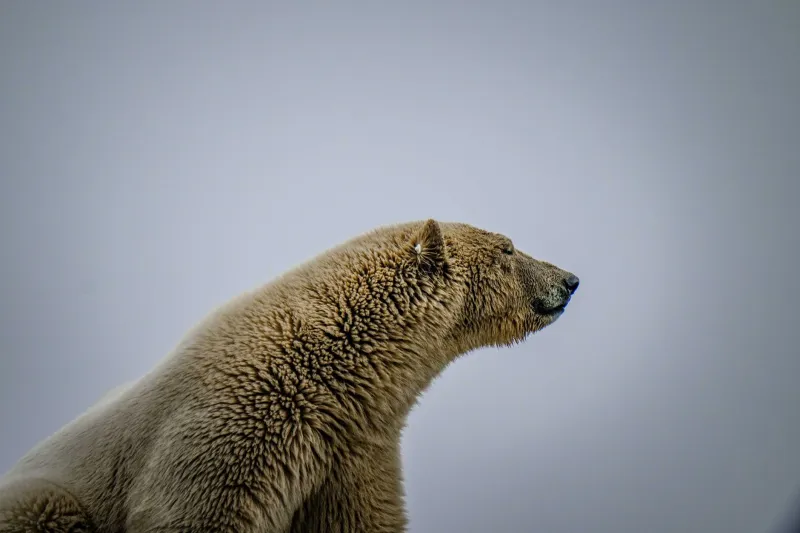
The choice of printing medium is equally consequential. Nicklen's work is available through Paul Nicklen Gallery in formats including fine art archival pigment prints and metallic face-mount presentations, each of which interacts differently with ambient light. A metallic face-mount, for instance, can dramatically intensify the luminosity of an underwater image, making the bioluminescence of a deep-sea subject appear almost three-dimensional. An archival matte print, by contrast, may better serve the quiet gravity of a lone polar bear against a monochrome ice field. These are not arbitrary distinctions; they reflect considered judgments about how each image should live in the world.
The Role of Sequencing and Series
Another dimension of Nicklen's post-production practice that is often overlooked is his attention to how individual images function within a broader body of work. Many of the prints offered through Paul Nicklen Gallery belong to extended series — thematic groupings that reward sustained attention and reward collectors who choose to engage with his work at depth.
The decision to include a particular image in a series, or to present it as a standalone work, shapes how that image is interpreted. An image of a leopard seal, presented alone, reads as a portrait. Placed within a sequence that documents an extended behavioral encounter beneath Antarctic ice, it becomes something richer — a chapter in a larger narrative about predator intelligence, interspecies curiosity, and the astonishing complexity of ecosystems most humans will never directly observe.
For collectors assembling a cohesive body of work, this curatorial dimension is significant. Acquiring prints that belong to a common series creates an internal dialogue within a collection, elevating the whole beyond the sum of its individual parts.
Where the Shutter Click Ends and the Art Begins
There is a tendency, in discussions of photography, to locate the decisive creative act at the moment of capture — the fraction of a second in which the photographer and the subject are aligned. For Nicklen, that moment is real and irreplaceable. But it is also, in an important sense, only the beginning.
The weeks of post-production work that follow an expedition — the thousands of editorial decisions, the color calibrations, the conversations with master printers, the careful matching of image to medium — these are not ancillary to the art. They are constitutive of it. They are the process through which a raw encounter with wilderness becomes the finished, enduring object that a collector brings into their home and lives alongside for years.
Understanding this process does not diminish the magic of Nicklen's imagery. If anything, it deepens it. Every print available through Paul Nicklen Gallery represents not just a moment in the wild, but the full weight of an artist's vision — applied with equal rigor both in the field and at the editing desk.