The Collector's Eye: Designing a Home Around Paul Nicklen's Wilderness Art
There is a particular kind of silence that settles over a room when a powerful image occupies its wall—a stillness that invites the eye to linger, the mind to wander, and the spirit to recalibrate. Paul Nicklen's work has that quality in abundance. Whether it is the eerie luminescence of a polar bear drifting through Arctic waters or the dense, cathedral-like canopy of an ancient rainforest, his photographs carry a weight that transcends decoration. For the serious collector, the question is not simply which image to acquire, but how to place it so that its full emotional resonance can be felt, day after day.
Curating a Nicklen collection for your home is an exercise in restraint, intentionality, and a genuine willingness to let the art lead.
Begin With the Room, Not the Image
The most common misstep among first-time collectors is falling in love with a specific print before considering the space it will inhabit. A more disciplined approach begins with the room itself: its dimensions, its existing palette, the quality and direction of its natural light, and the emotional register you wish it to hold.
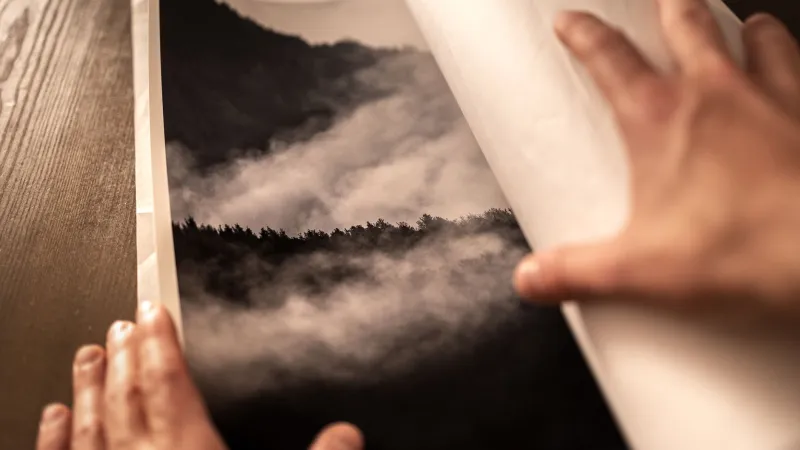
Nicklen's portfolio spans an extraordinary range of environments—glacial blues, the warm amber of kelp forests, the graphite tones of storm-swept coastlines. Each carries a distinct psychological temperature. A deep-toned image of humpback whales ascending through dark Pacific water will anchor a room differently than the near-white expanse of a snow leopard traversing a Himalayan ridge. Before selecting a piece, spend time in the room at different hours. Notice where the light falls in the morning, how the afternoon shifts the mood, and what the space feels like after dark. These observations will inform not only which image belongs there, but also how it should be framed, finished, and illuminated.
Scale as a Design Principle
Scale is perhaps the most underestimated variable in residential art placement. In Nicklen's work, scale is not merely an aesthetic consideration—it is an ethical one. These images document ecosystems under pressure, animals of immense physical presence, and landscapes that dwarf human comprehension. Printing too small can inadvertently diminish that gravity.
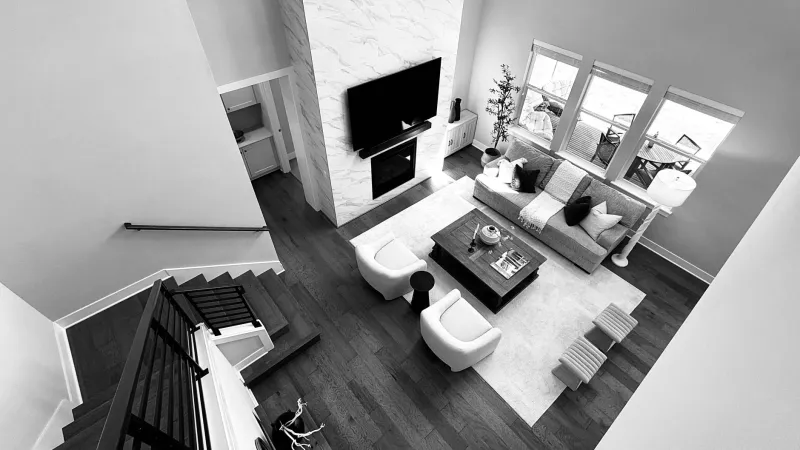
For open-plan living spaces, great rooms, or lofted interiors common in contemporary American homes, a large-format print—often beginning at 40 by 60 inches and extending well beyond—commands the architectural proportions of the room while allowing the image's detail to reward close inspection. In more intimate settings, such as a study, a bedroom, or a narrow hallway, a carefully chosen medium-format piece can create a portal-like effect, drawing the viewer into a specific moment without overwhelming the surrounding environment.
As a general guideline, the primary piece in any arrangement should occupy between one-half and two-thirds of the wall width it anchors. This proportion creates visual stability without crowding.
Building a Cohesive Multi-Piece Collection
Many collectors begin with a single work and find, in time, that one image opens an appetite for more. When building across multiple rooms—or grouping works within a single space—coherence becomes the central challenge.
Coherence does not require uniformity. A home that tells a unified story through Nicklen's work might draw from several ecosystems while maintaining a consistent tonal family: cool, aquatic blues across a dining room and adjacent hallway, for instance, or a progression from terrestrial to oceanic imagery along a staircase that metaphorically descends from land to sea. What matters is that the works feel in dialogue with one another rather than competing for dominance.
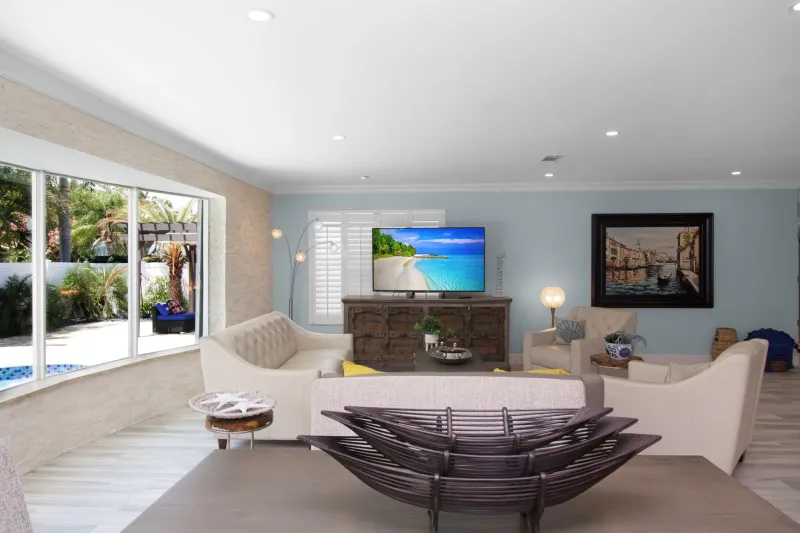
Framing plays a substantial role in achieving this harmony. Nicklen's gallery offers archival-quality framing options designed to honor the integrity of each image. For collectors seeking a clean, contemporary aesthetic—well-suited to the minimalist interiors prevalent in cities like New York, Los Angeles, and Chicago—a slim, natural wood or brushed aluminum frame allows the image to breathe without introducing a competing visual element. For more traditional or eclectic interiors, a deeper frame with a wide matte can provide the separation and formality that older architectural spaces often demand.
The Role of Lighting
Perhaps no single variable does more to animate—or undermine—a photographic print than lighting. The luminosity that defines Nicklen's undersea work, the delicate gradients of an Arctic dawn, the sharp contrast of a predator against snow: all of these qualities depend on how light reaches the surface of the print.
Natural light, while beautiful in principle, is inconsistent and can cause fading in works not properly protected with UV-resistant coatings or acrylic glazing. For long-term preservation and consistent presentation, dedicated picture lighting is strongly recommended. Track lighting with adjustable heads allows for precise aiming and can be repositioned as a collection grows. Picture lights mounted directly above a frame offer a more traditional solution and work particularly well in dining rooms or studies where ambient light levels are already controlled.
Cool-white LED sources tend to enhance the blue and green spectrums that dominate much of Nicklen's polar and marine work. Warmer sources, by contrast, can bring unexpected richness to his terrestrial imagery—the amber grasslands of the Serengeti or the rust-toned coats of grizzlies in the Pacific Northwest. Experimenting with color temperature before committing to a fixed installation is time well spent.
Letting the Collection Tell Your Story
A collection is, ultimately, a form of autobiography. The works you choose to live with reveal something about what you value, what moves you, and how you understand your relationship to the natural world. Nicklen's photography is particularly well-suited to this kind of personal narrative-building because it spans such a breadth of habitat, species, and emotional register.
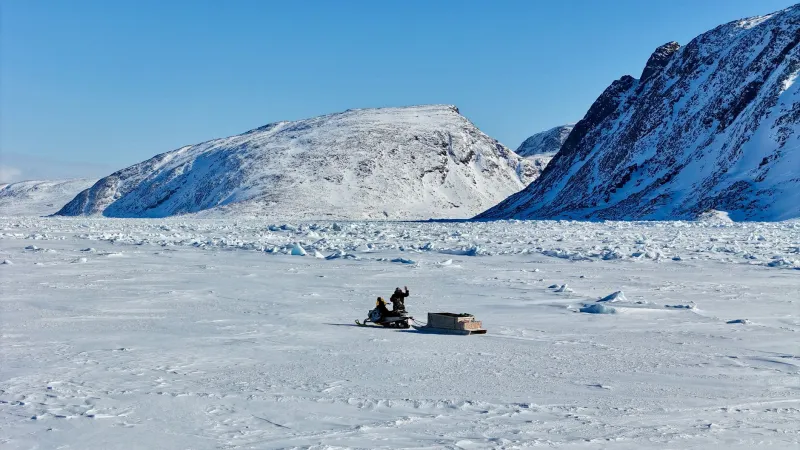
Some collectors organize their acquisitions around a single ecosystem they have visited or hope to visit—building a body of Arctic work that reflects a personal connection to the polar regions, for example. Others follow a more intuitive path, acquiring pieces that arrested them in the moment and trusting that a coherent sensibility will emerge over time. Both approaches are valid. What matters is that each acquisition is made with genuine engagement rather than as a reflexive gesture toward filling wall space.
When a Nicklen print is placed with care—scaled to its room, framed with intention, lit with precision, and positioned within a collection that has been assembled with thought—it does something remarkable. It stops being a photograph on a wall and becomes a window. A reminder. A point of return.
That transformation is the true work of the collector.