Five Years in the Making: The Long Arc of a Single Transformative Paul Nicklen Photograph
There is a tendency, when standing before a powerful wildlife photograph, to imagine the moment of its making as sudden and singular—a fraction of a second in which the photographer and the wild world aligned perfectly, and something extraordinary was preserved. For Paul Nicklen, the reality is often far more complex. Some of his most significant works were not captured so much as pursued: across multiple expeditions, across seasons and years, across successive iterations of a visual idea that refused to resolve itself until the conditions, the artist, and the subject were finally ready to meet.
The following is an account of how one such image came to exist—not as a single decisive moment but as the culmination of a five-year creative and physical commitment.
The First Expedition: A Concept Without a Frame
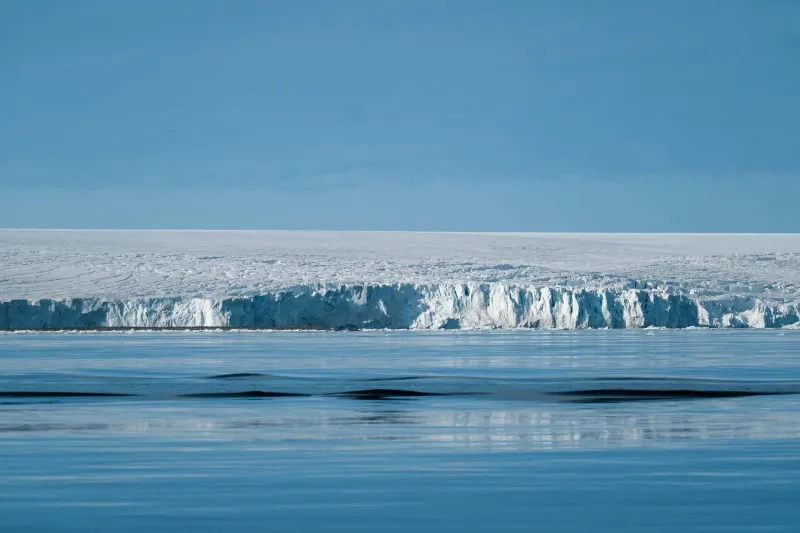
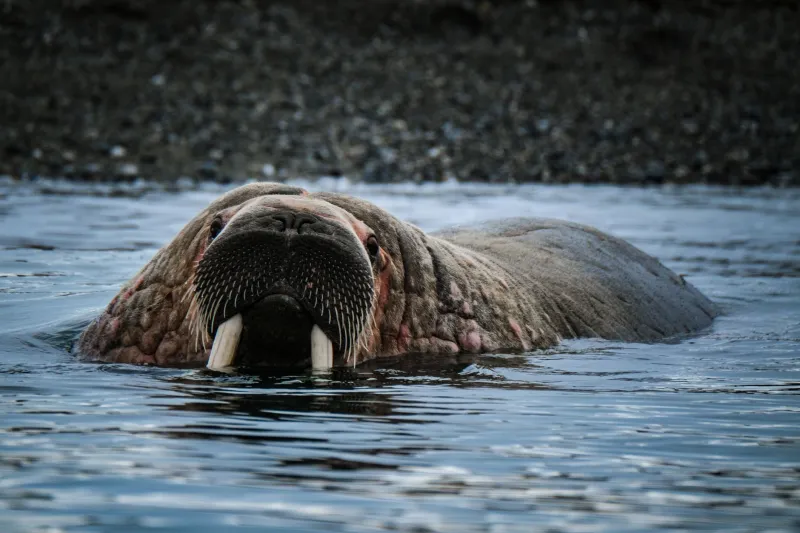
The image began not with a camera but with a question. During an early expedition to the high Arctic, Nicklen encountered conditions that suggested a visual possibility he could not yet articulate fully: the relationship between a specific quality of polar light—low, lateral, almost horizontal in the long Arctic winter—and the behavior of a particular species moving through sea ice. The interaction he observed lasted only minutes, but it lodged itself in his thinking as a problem worth solving.
He returned from that expedition without the image. What he carried back instead was a more precise understanding of what he was looking for: the specific angle of light, the behavioral state of the animal, the ice formation that would function as both setting and compositional element. These were parameters, not guarantees. The Arctic is not a studio.
Iteration and Failure
The second and third expeditions produced images that approached the vision without achieving it. On the second trip, the light was present but the animal's behavior did not cooperate—the encounter was brief and the subject's orientation relative to the camera never reached the configuration Nicklen required. On the third, the conditions were reversed: the animal was present and engaged, but the light was flat and diffuse, stripping the scene of the dimensional quality that was central to the image Nicklen had been developing in his imagination.
These near-misses were not discouraging in the conventional sense. Nicklen has spoken about how failed expeditions refine the vision rather than diminish it. Each unsuccessful attempt generated new information: about the behavior of the species across different ice conditions, about the precise window of light that the image required, about the physical positioning that would allow him to capture the subject at the necessary angle without disrupting the encounter. The failures were, in effect, fieldwork.
Technical Refinement Between Expeditions
Between the third and fourth expeditions, Nicklen made significant changes to his technical approach. He worked with his equipment in controlled conditions to test exposure strategies for the specific lighting scenario he anticipated. He refined his understanding of the depth-of-field relationships that would allow the subject to be rendered with sufficient clarity while preserving the atmospheric quality of the surrounding environment.
This period of technical preparation is rarely visible in the finished work, but it is essential to it. A Nicklen print achieves its characteristic quality not only because of what happens in the field but because of the extensive preparation that precedes each expedition. The artist arrives knowing, to the greatest degree possible, how he will respond when the conditions he has been waiting for finally present themselves.
The Fourth Expedition: Proximity to Resolution
By the fourth trip, Nicklen was working with a level of specificity that transformed his experience of the environment. He knew what he was looking for with enough precision that he could recognize, in real time, how close he was to the image. On this expedition, he came closer than ever before—close enough that several frames from the trip entered serious editorial consideration. But the defining element remained just out of reach: the animal's posture, in every frame that otherwise satisfied his criteria, fell slightly short of the compositional authority the image demanded.
He left the Arctic again without the print. But he left with something equally valuable: confirmation that the image existed. It was not a fantasy. The conditions could align. The question was when.
The Fifth Expedition: Arrival
In the fifth year, on a return to the same region during the same seasonal window, the elements converged. The light arrived at the angle he had been waiting for. The animal was present and unhurried. The ice formation provided the structural counterpoint the composition required. Nicklen made the exposures with the economy of someone who has rehearsed the moment thousands of times in imagination—calm, precise, and fully present to what was happening in front of him.
The image that emerged from that encounter was not accidental. It was the product of five years of accumulated knowledge, physical commitment, and artistic refinement. When it arrived at the gallery wall, it carried all of that history within it—invisible to the viewer, but entirely responsible for the authority the print commands.
What This Means for Collectors
For those who collect Nicklen's work, the provenance of an image like this one reframes the meaning of the object itself. A print is not merely a reproduction of a moment. It is the endpoint of a years-long creative investigation, a material record of the patience and discipline that the gallery's entire body of work represents. That understanding does not simply add sentimental value. It grounds the work's significance in something durable: the recognition that genuine artistic achievement, in any medium, is almost never instantaneous.