When Wilderness Goes Quiet: The Emotional Frequency of Paul Nicklen's Photography
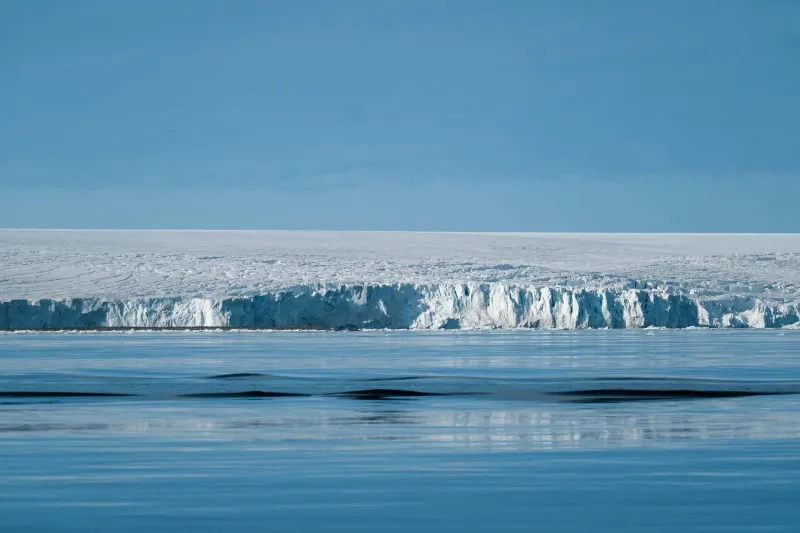
There is a particular quality to a room hung with Paul Nicklen's work. Visitors often pause longer than expected, not simply because the images are beautiful—though they are, with a precision that rewards sustained attention—but because something in the composition insists on stillness. The hum of a household recedes. The eye travels inward. And for a moment, inexplicably, the viewer hears something: wind dragging across a polar plateau, the distant percussion of ice calving into open water, or the profound, almost cellular silence of a species that may not exist in the wild a generation from now.
This is not accidental. It is the result of a photographer who has spent decades learning to translate the acoustic and emotional textures of wilderness into a purely visual language.
The Architecture of Auditory Suggestion
In classical music theory, silence is not the absence of sound—it is a compositional element with its own weight and intention. Nicklen's photography operates on a similar principle. His most iconic images are not crowded with information. They breathe. A lone polar bear drifting on a fragment of sea ice occupies a field of negative space that communicates vast, windswept emptiness far more effectively than any landscape panorama. The eye, finding nowhere else to travel, settles into that space and begins to fill it with sensation.
This technique—using visual restraint to provoke sensory imagination—is one of the defining characteristics of his work as a fine art practice. It separates his prints from documentary photography, however extraordinary that documentary tradition may be. A Nicklen photograph does not simply record a place or a creature; it reconstructs the felt experience of being present within a world that most of his collectors will never physically enter.
For those who acquire his prints, this quality transforms a wall into something closer to a threshold.
Species on the Edge of Audibility
Nicklen grew up in a small Inuit community on Vancouver Island and spent formative years on Baffin Island, absorbing a relationship with the natural world that was rooted in reciprocity rather than observation. That upbringing surfaces in the way his camera approaches its subjects. There is no predatory urgency in his compositions—no sense of an intruder capturing something unaware. His wildlife portraits, particularly those of Arctic and sub-Arctic species, carry an almost conversational intimacy.
This intimacy has a sonic dimension. When we look at his image of a narwhal surfacing through fractured ice, we do not merely see an animal. We register the particular hush of a polar sea in winter, the soft displacement of water, the improbable delicacy of a creature navigating a world that is being reshaped around it with alarming speed. The image is quiet in the way that a held breath is quiet—taut with suppressed sound.
For collectors, this is precisely the quality that makes such works enduring presences in a home rather than decorative objects. A print that evokes this kind of sensory depth does not fade into the background. It continues to make demands on the viewer, subtly and persistently, across years of daily encounter.
The Sound of What Is Being Lost
Nicklen has spoken candidly about the urgency that drives his practice. He is not, at his core, a photographer who seeks beauty for its own sake—though beauty is invariably present in his work. He is, rather, a witness. And what he is witnessing, with a scientific literacy and emotional commitment that distinguishes him from many of his contemporaries, is a world in the process of profound and irreversible transformation.
The silence his photographs evoke is not merely atmospheric. It is elegiac. When a collector in Chicago or San Francisco or New York hangs one of his Arctic prints in their home, they are not simply acquiring an image of a place. They are acquiring a record of a soundscape—the particular acoustic ecology of a polar environment—that may within this century be substantially altered or lost. The silence in the frame is inseparable from the silence that climate disruption is slowly imposing on these ecosystems.
This is where Nicklen's work achieves something that transcends even the most accomplished nature photography. It makes the abstract personal. The statistics of species decline and ice sheet recession, however alarming on the page, do not lodge in the body the way that a single image of a leopard seal regarding the camera with an expression of impossible gentleness does. That image—that silence—does something to a viewer that a data visualization cannot.
Collecting as an Act of Listening
The fine art market has long understood that great works carry emotional intelligence—the capacity to communicate states of feeling that resist verbal articulation. What is perhaps less commonly discussed is the role that collected works play in the ongoing emotional and intellectual life of their owners.
Nicklen's prints, precisely because of their auditory suggestion and their elegiac undertone, are not passive possessions. Collectors consistently report that the works change with time—not physically, but experientially. A print that initially struck a buyer as simply magnificent gradually reveals its quieter registers. The more one lives with a Nicklen image, the more one hears in it.
This is the hallmark of work made at the highest level of artistic intention. It does not yield everything at once. It reserves something—a frequency, a resonance—that only becomes perceptible through sustained proximity. For the collector who chooses to live with these images, that sustained proximity becomes a form of education: a slow, daily instruction in the auditory texture of wilderness, and in the weight of what the world stands to lose.
Silence as a Call to Attention
There is a paradox at the heart of Nicklen's most powerful work: the images are quiet, and yet they are among the most insistent things in any room they occupy. That insistence is not decorative or theatrical. It is the insistence of a world that, through the mediation of an extraordinarily gifted artist, has found a way to make itself heard.
For collectors and art enthusiasts who bring these works into their homes, the experience is less like acquisition and more like invitation—an invitation to stop, to look, and in the looking, to listen. To hear the wind that carved those ice formations. To hear the water that once held that glacier in place. To hear, most acutely, the silence that follows when such things are gone.
That is the particular genius of Paul Nicklen's photography: it does not merely show us wilderness. It makes us grieve for it, quietly and continually, in the most intimate spaces of our daily lives.