The Living Investment: How a Paul Nicklen Purchase Reaches Beyond Your Walls and Into the Arctic
In most conversations about art collecting, the language is one of acquisition—of ownership, of value, of the relationship between a work and its new home. A Paul Nicklen print participates in that conversation, but it also extends well beyond it. When a collector acquires one of Nicklen's limited-edition works through the gallery, a portion of the proceeds does not remain in the art world. It travels north, into the polar regions that Nicklen has spent decades documenting, and it funds the conservation infrastructure that makes the continued existence of those landscapes possible.
This is not incidental to the work. It is, in Nicklen's view, inseparable from it.
The Connection Between Image and Action
Nicklen co-founded SeaLegacy, a nonprofit organization dedicated to ocean and polar conservation, with the explicit understanding that photography alone cannot protect the ecosystems it documents. The images create awareness; the organization converts that awareness into action. Gallery sales provide a direct funding mechanism that links the act of collecting to the act of conservation in concrete, traceable ways.
For American collectors who have grown increasingly attentive to the social and environmental dimensions of their purchasing decisions, this alignment offers something that purely decorative art cannot: a verifiable connection between aesthetic investment and meaningful impact. The conversation a Nicklen print generates in a living room or corporate lobby is underwritten, in a real sense, by the field work it helps to finance.
Where the Proceeds Go
SeaLegacy's work spans several interconnected domains, each of which receives support through the organization's funding streams, including proceeds from gallery sales.
Polar research partnerships represent one significant area of investment. SeaLegacy collaborates with marine biologists, climate scientists, and indigenous community researchers to document environmental change in the Arctic and Antarctic with the same precision that Nicklen brings to his photography. This research generates data that informs both policy advocacy and public education efforts.
Media and advocacy campaigns constitute another major area of impact. SeaLegacy produces visual content—photographs, films, and digital storytelling—designed to reach policymakers and general audiences alike. The organization has contributed to international policy discussions around marine protected areas, deep-sea mining regulations, and climate commitments, using imagery as a form of evidence and argument.
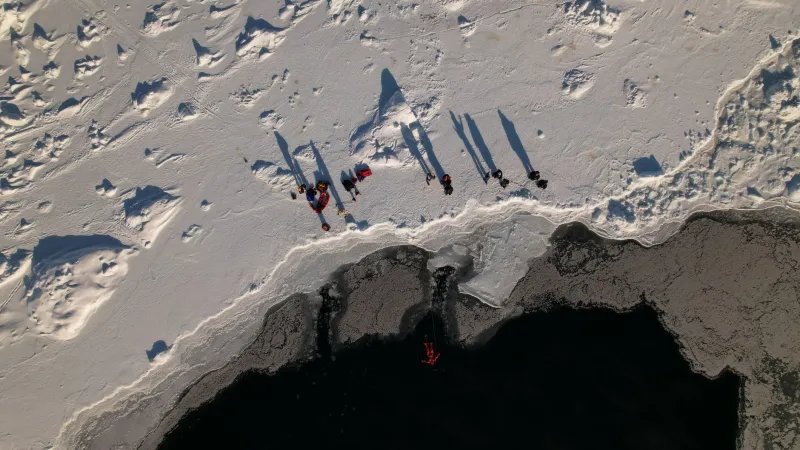
On-the-ground expedition support enables researchers and storytellers to access remote polar environments that would otherwise remain beyond reach. Funding these expeditions is logistically demanding and financially significant; gallery sales contribute directly to making them possible.
The Collector as Stakeholder
What distinguishes this model from conventional philanthropic art purchasing is the degree to which the collector becomes a genuine stakeholder in an ongoing project. A Nicklen print is not a static object whose environmental relevance ends at the point of sale. It is a node in a living network of conservation activity that continues to generate impact long after the work is hung.
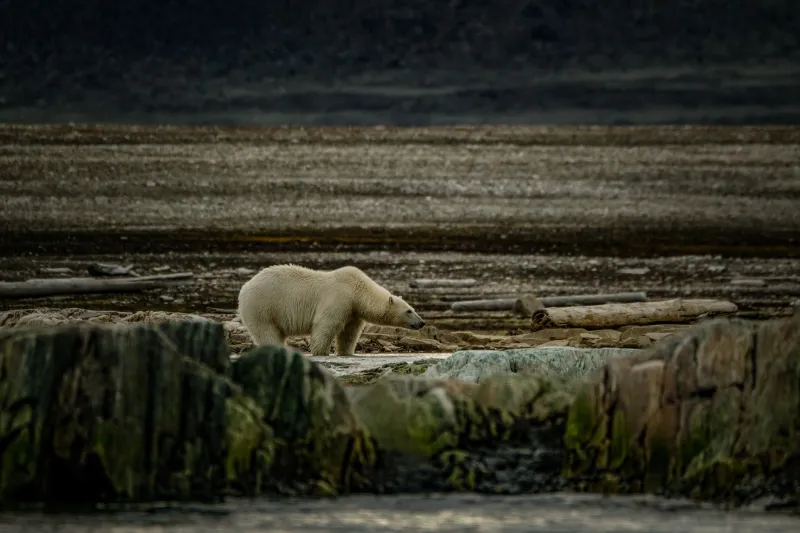
Collectors who understand this dimension of their acquisition often describe a shift in how they relate to the work itself. The leopard seal emerging from Antarctic waters, or the polar bear navigating thinning ice, becomes not only a subject of aesthetic contemplation but a living argument for the value of the habitat it inhabits—a habitat that the collector's purchase is actively working to protect.
This is a particularly resonant proposition for collectors in the United States, where public discourse around climate and conservation has become increasingly polarized. The Nicklen model offers a form of engagement that transcends political framing: direct, personal, and grounded in the specific beauty of places most people will never visit.
Transparency and Accountability
Serious collectors reasonably ask how they can verify that the conservation commitments attached to a gallery purchase are honored in practice. SeaLegacy maintains public reporting on its programs and outcomes, providing the kind of accountability that sophisticated donors and collectors expect. The organization's track record of documented field work, policy engagement, and media impact offers a substantive answer to that question.
Art advisors who work with environmentally conscious collectors increasingly recommend that clients consider not only the aesthetic and market credentials of an artist but the integrity of the conservation commitments their work supports. By both measures, Nicklen's gallery presents a compelling case.
Art That Continues to Work
The most enduring works in any collection are those that remain alive to the viewer over time—that reveal new dimensions as the world around them changes. A Nicklen print possesses this quality in an unusually literal sense. As Arctic sea ice continues its documented decline, as polar species adapt or struggle, the images on a collector's wall become more rather than less significant. And through the conservation funding they help generate, they continue to participate in the effort to ensure that the wilderness they depict has a future worth photographing.
For the collector who wants their investment to mean something beyond the aesthetic, that is a rare and genuinely valuable proposition.